The man without a name
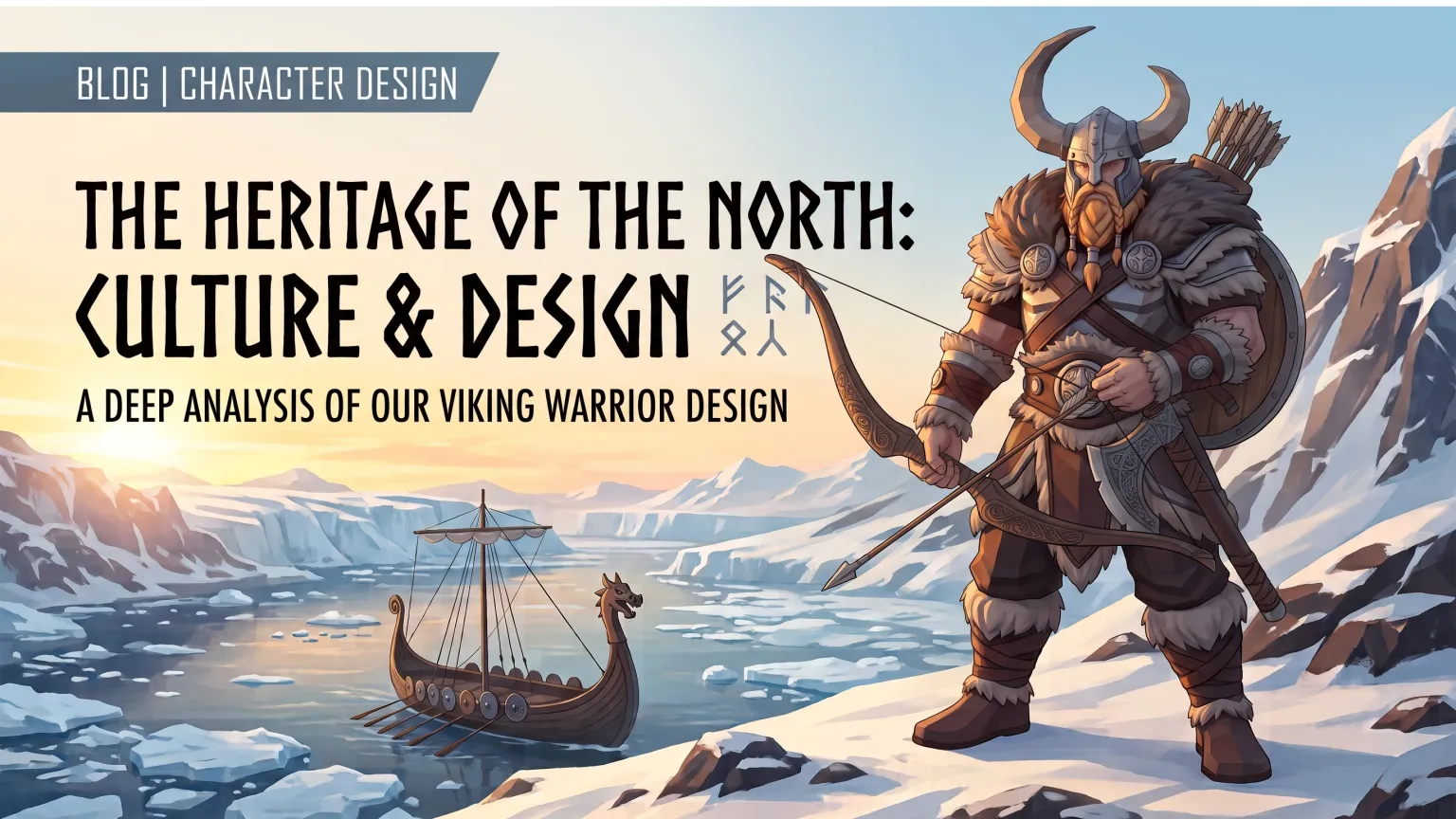
The last post ended on the one thing the game deliberately never tells you: who you are. No name, no face, no voice in your ear. A few people read that as “so there is nobody in there”, and that is not it at all. There is an entire life behind that helmet. I simply never say any of it out loud while you are playing.
So this post is that life, written out properly for the first time, next to the first character concept art I have drawn for HoldStrong. One warning before we start: what follows includes the turn the game saves for your first death. I decided in the last post to talk about the Valhalla loop openly rather than guard a surprise that works exactly once, so I am not going to start being coy about it now.
The man who tore himself away
He had a family. That is the part everything else in his story hangs from, and it is the reason he is not at home.
The bad news reached the settlements before the cold did: an unknown army was marching south, out of the direction of the Eternal Ice. Nobody had a count, nobody had a name for it, and nobody who went up to look came back. The defence of the north is a chain of towers standing a long way from anywhere people actually live. So the only way for him to stand between that army and his family was to leave that family behind and put a week of frozen country between himself and them.
That is what I mean when I call him brave. He is not brave because he swings an axe well. He is brave because he tore himself away from the people he was protecting, knowing perfectly well that protecting them meant never being there.
I gave him that family for a very practical design reason as well. A game about holding one position forever needs an answer to the question of why anybody would do that, and “a king ordered it” is the weakest answer available. Everything behind him is worth more than he is, and that is the whole of his motivation.
The tower he was sent to
He went north with others. Ordinary men, the same as him, split up between the towers of the northern border. The one he drew is Rimehold, the outpost you hold in the game.
Rimehold is not a fortress. It is old, improvised and half swallowed by frost, and it had already been defended for generations before his group ever arrived. None of that meant anything to them on the way up, because on the way up it was still just a posting.
Then they got there and saw it properly. There were far more enemies than any of them had been told to expect, and the longer they stood there, the more of them came. The first thing this outpost teaches you is not that the enemy is strong. It is that the enemy does not run out.
The men he came with
They fought well. I want that said plainly, because the story would be a lot cheaper if they had not.
Their numbers went down anyway. One after another, the men he had marched up with fell on that wall, and the ice kept sending more than the wall could take. In the end one man was left on a position built for a garrison, fighting a fight with no end in it.
This is where his story connects to the bestiary post, and it is the cruellest thing in the whole game. The ice raises whoever falls here. The comrades who died beside him are the Draugr, so they come back at him wave after wave in the mail and the round shields he recognises, because he watched them put that gear on. He does not know the name of a single creature out there in the ice. He knows all of theirs.
That is the reason the standard enemy in this game is the tragic one rather than the frightening one.
The prayers that nobody answered
He is a believing man. He keeps the rituals of the north properly, the way he was raised to, and he asks the gods for help through every single one of them.
Nothing ever answers. Not once, across every night he stands there. He performs the rites in the cold and in the dark with his hands wrecked, and the sky above the Eternal Ice stays exactly as empty as it was before he started.
For a long time I worried that this stretch was simply bleak. It is not, and I only understood why once I had written down the rule from the last post: nothing that happens before the first death is allowed to look like Valhalla. No warm firelight, no hall imagery, no mention of the Einherjar anywhere. The unanswered prayer is that rule living inside the fiction instead of sitting in my design document. The gods are not ignoring him. They have simply not collected him yet.
The night he finally got an answer
He is tired and it is cold, and that combination is what actually kills him. He takes a wound in an attack he would have read easily a month earlier, and he dies at the foot of his own tower.
And then he is not dead. He is standing in a warm hall full of noise, at a table with the gods he has been praying to all winter, and they are eating with him like a man they have been expecting for a while. They give him their favour, and they send him back down with their strength.
There is a bitter joke in there that I like enormously. He prayed for one single thing the entire time: let me hold this wall, and then let me go home. He gets an answer to exactly half of it. The gods take him seriously at last, and what their favour buys him is the right to hold that wall every morning, forever.
Why his hands are empty in this picture
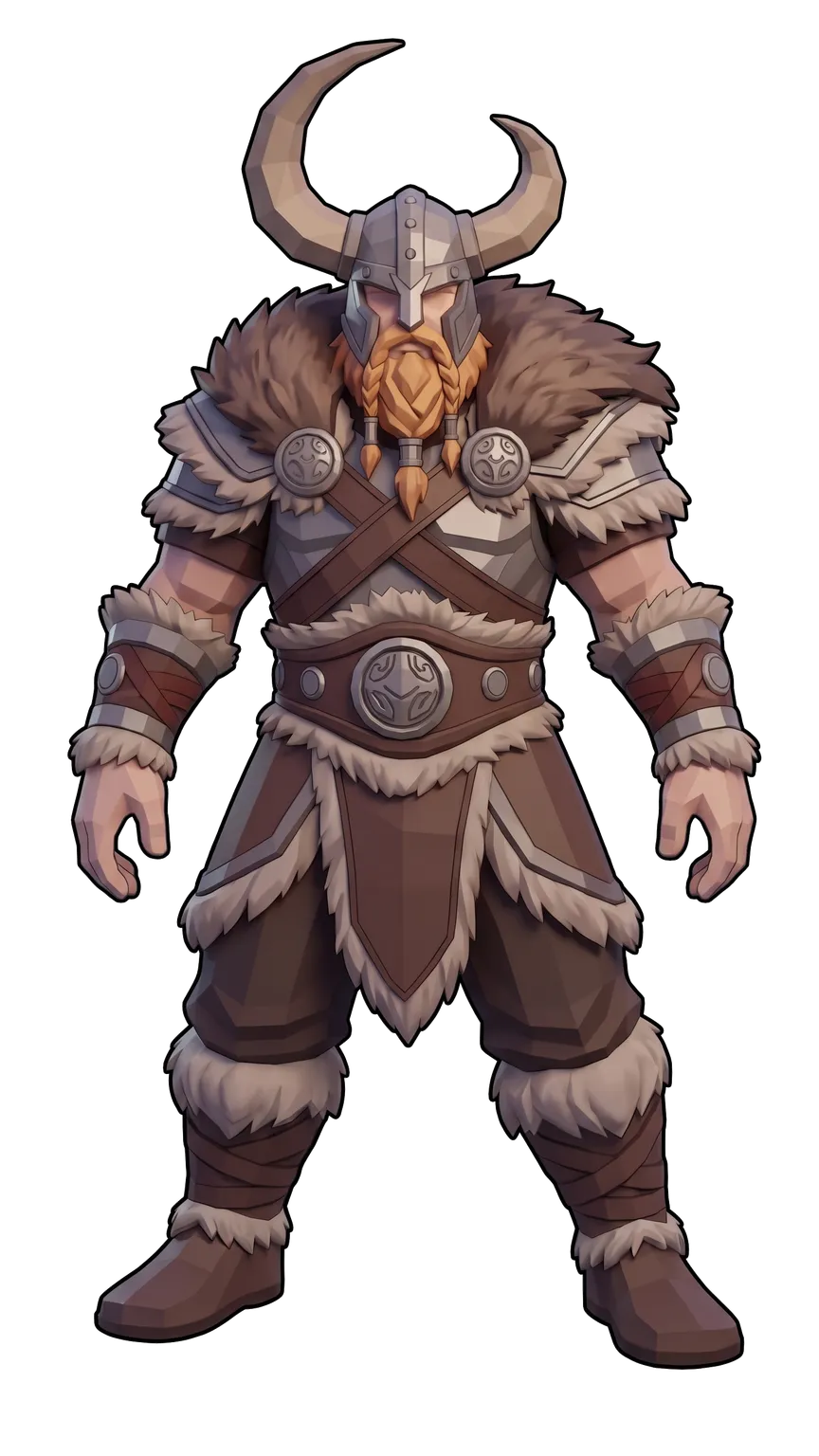
Have a close look at the concept art above. He is carrying nothing at all, and that is not me running out of patience before I got to the weapon.
He arrives with nothing. Everything he fights with comes down out of Odin’s hall at the start of a run, one piece at a time, and it belongs to that hall rather than to him. An axe off the wall, a shield out of the mead hall, sometimes the bones of somebody who fell beside him the day before. Drawing him empty-handed keeps that straight in my own head every time I open the file.
The horns are the other decision worth admitting to. Vikings did not wear horned helmets, the whole idea is a nineteenth-century invention, and I put them on him anyway with my eyes open. The reason is the same one that gave the Fenrir brood the only four-legged silhouette in the game: with a top-down camera you get about a tenth of a second to read a shape. The horns make the one figure you control unmistakable from any angle, against snow, in a crowd of Draugr wearing the same mail he is. Historical accuracy would have cost me the most important silhouette on the screen, so accuracy lost.
The rest of the drawing is fur, wrapped leather and three spiral discs, which is the outpost’s own issued gear rather than anything heroic. His face is in there in full detail, and you will essentially never see it from that camera distance. That detail is for me, as a reference for the model I still have to build.
To be clear about where this actually stands: nothing of this is modelled yet, exactly as with the four enemies in the bestiary post. It is a drawing, and the 3D work comes after the demo on 16 October.
Update, 15 October 2026: I am moving the demo back by thirty days. It now comes out on 15 November 2026, and I explain why in its own post.
The one thing I have not decided
His family never appears. There is no cutscene, no flashback and no line of dialogue about them anywhere in the game as it stands.
What I have not settled is whether they are ever referred to at all. Leaving them out completely keeps him the blank that you step into, which is the entire point of a character with no name. But one small object among the grave goods on that tower, something he carried up there that obviously came from home, would cost me nothing and would land hard the first time somebody noticed it. My worry is that it turns him into a specific person at exactly the moment I need him to be anybody.
That is the question I am chewing on this week, so it is the one I would most like to hear about. Tell me on Discord.